The 7-Day Meal Map and Shot-Day Routinethat Make Every Hard Week Nearly Effortless
You’ll Know Exactly What To Eat, What To Do On Shot Day, And How To Run It Again At Every Dose — Like You’ve Done It Before…
- Walk into week one with every day already mapped, so day seven ends on a plan you followed instead of a week you improvised. Page 28.
- Know exactly what to put on your plate every day, so every meal stops being a decision you second-guess. Page 7.
- Run shot day from a routine that starts the night before, so your hardest day arrives already handled instead of dreaded. Page 37.
- Hit your protein without forcing down a single thing you do not want, so getting it in stops being a guessing game. Page 24.
- Run it again at every dose increase, so the queasy week after a step up feels like a routine you already know instead of starting over. Bonus 6.


Here is the strange thing nobody warns you about.
You spent weeks getting to this point. The research. The appointment. The questions. The decision. And then one ordinary morning you are standing in your kitchen, shot done, holding a coffee, and the only thought in your head is:
…okay. Now what?
How much are you supposed to eat? What if nothing sounds good? Is this feeling normal? Why does every piece of food advice you have ever heard suddenly not fit?
And here is the part that gets to people the most. It feels like you should already know this. You did the hard thing. You started. So why does the day-to-day feel like improvising with no instructions?
If you are further along, you know a version of this too. Your provider moves your dose up, and within a day or two that same morning is back. The appetite drops again. The queasiness returns. The "what do I eat now" question you thought you had answered is suddenly open again. Every dose increase is a new week one.
Take a breath. You are not behind, and you are not doing it wrong. You ran into a gap almost everyone hits, and it has nothing to do with willpower.
Most people who stop do it right at the start
Pharmacy data on new GLP-1 prescriptions. The reasons people give most often are side effects and cost, not a medication that failed them. And the side effects that drive it, nausea especially, are most prominent in the first weeks and around each dose escalation.
Which is worth sitting with for a second. It means the hardest part of this is not the year ahead. It is the next seven days, and the seven days after every dose change. And unlike almost everything else about this process, that week is the one part you can actually get ready for, every single time.
Every plan you have ever tried was built for someone too hungry
- Cut calories
- Eat less
- Resist temptation
- Push through hunger
- Get protein in when you are not hungry
- Drink water when thirst has faded
- Stay gently consistent when food is not appealing
- Eat enough of the right things, not less of everything
When you are not hungry, "eat less" is useless advice. You are already there.
That is not you failing. That is the gap. And the gap has a fix.
Three things, and none of them are hard
There is no app to learn and nothing to set up. You open a page, you follow it, you close it.
Open it and skim the map
It lands in your inbox straight away. Read the first chapter, look at Day 1, and print the shot-day card and tracker if you want them on the counter.
Follow the day's focus
One page per day. Today's focus, flexible meal ideas, and what to drink. Not hungry? Eat less of it. Nothing appeals? Use the backup list. No plate to plan from scratch.
Tick off appetite, water, protein
One row in the tracker. That is the whole check-in. By day seven it hands you your own patterns and real notes for your next appointment.
Five minutes a day, and week one stops being something you improvise. Then your dose goes up, and you open it again.
No calorie counting. No apps. No willpower required. If shot day falls mid-week, the checklist takes over for 48 hours and hands you back to the map. Bonus 6 shows you exactly how to re-run the whole thing on a dose-increase week.
Every dose increase is a new week one
Most people move up through several doses in their first months. Each step up tends to bring the first week back: the quieter appetite, the queasy days, the "what do I eat now" question. So you run this again. Same map, same shot-day card, fresh tracker row.
First shot
Run the full seven days
First dose increase
Shot-day card, gentle days, re-track
run it againNext dose increase
You already know your pattern
and againEvery step after
It becomes a routine, not a scramble
until it is automaticYour provider decides your dose and your schedule. This handles the week that follows each change, so a plan you bought once keeps working every time your body has to adjust.
Actual pages, not a promise of pages
Every screenshot below is a real page from the guide, exactly as you will get it.
The 7-Day Kickstart Meal Map
Each day has one focus, then flexible ideas for breakfast, lunch, dinner, snacks, and hydration, plus a short check-in to close the day out.
Nothing here is a rule. Do not like a suggestion? Swap it. Not hungry? Eat less. Had a good appetite day? Eat a bit more. The map serves you, not the other way around.
Pages 16 to 23
The Shot-Day Preparation Checklist
Shot day comes around on a schedule, which makes it the one hard day you can plan for. The night before, the morning of, and the hours after are all laid out.
Run it once and it stops requiring any thought. And it is the first page you will reach for again the week your dose goes up.
Pages 36 to 40
The Low-Appetite Protein Cheat Sheet
The one thing women struggle with most in week one is protein, because eating feels like effort. So this chapter is nothing but small, dense, low-effort options.
Snacks you will actually reach for on a low day. Mini-meal combinations. And a shake used as a backstop rather than a chore.
Pages 24 to 29
The Two-Minute Daily Tracker
Appetite, water, protein, energy, digestion, notes. One row a day. That is the whole thing, and there is not a calorie in sight.
By day seven it hands you something useful twice over. Your own patterns, and a real record to bring to your next appointment instead of a shrug.
Pages 41 to 46
The GLP-1 Week One Optimizer
Your First 7 Days Playbook. The operating manual for the part the prescription leaves out.
- 01
The 7-Day Kickstart Meal Map
Open it, see today's focus, follow it. Flexible ideas for all seven days, built around a quieter appetite instead of a normal one.
Chapter 3 · Pages 16 to 23 - 02
The Low-Appetite Protein Cheat Sheet
Exactly how to get protein in on the days food feels like far too much effort. The single thing most people get wrong.
Chapter 4 · Pages 24 to 29 - 03
The Shot-Day Preparation Checklist
Night before, morning of, hours after. Your most unpredictable day becomes a routine you run the same way every week.
Chapter 6 · Pages 36 to 40 - 04
The GLP-1 Grocery Starter List
Stock the kitchen so the easy, protein-friendly choice is already waiting on a low-energy day.
Chapter 5 · Pages 30 to 35 - 05
The Symptom, Appetite and Progress Tracker
A two-minute daily check that shows whether you are on track, and builds the notes your provider actually wants.
Chapter 7 · Pages 41 to 46 - 06
Questions To Ask Your Provider
Walk into your next appointment with the right questions and real notes in hand, instead of forgetting half of them.
Chapter 8 · Pages 47 to 52
Plus 6 bonuses, because week one sets the tone
These cover the moments a meal plan cannot predict. The low days. The days you need an answer in ten seconds, not ten minutes.
Mini-Meals For "Nothing Sounds Good" Days
Easy options for the days you cannot face a real meal, so no day ends on empty.
The GLP-1 Meal Swap Grid
When a food suddenly feels wrong, swap it without losing the plan.
The Daily Tracker
The print-and-go version of your two-minute check-in.
The Shot-Day Routine Card
One page on the fridge. Run it every week on autopilot.
The First-Week Grocery Template
Fill it in, take it to the store, done.
Running The Guide On A Dose-Increase Week
Which days to re-run, when to go back to gentle foods, and how to restart the tracker so you can see your pattern step by step.
What women say about their first week

Why a guide about the first seven days, and every hard week after
Because the first week is the one nobody prepares you for, and it is the week that quietly decides how the rest of it goes. And because it does not happen only once. It comes back, in a smaller form, every time the dose steps up.
There is no shortage of information about how these medications work. What there was no shortage of, in every forum and comment section, were women asking the same practical questions at ten at night. What do I eat when nothing sounds good. Is this normal. Why do I feel worse on shot day. How do I get protein in when I am not hungry.
Those questions have answers. They are just spread across a hundred places and none of them are organized by day. So we organized them by day.
Who this is for
This is for you if
- You are about to take your first shot, or you are a few days in
- Your dose is going up soon and you remember how the first week felt
- You are starting again after stopping once before
- You want to be told what to do, not handed more theory
- You would rather set this week up on purpose than improvise it
This is not for you if
- You want medical advice about your dose or your medication
- You are looking for a strict diet with rules and restrictions
- You want a calorie tracker or a macro plan
- You enjoy figuring it all out from scratch as you go
Women who started with a plan instead of a guess
The first week is the part these stories have in common. Not a diet, not willpower, just knowing what to do on day one.
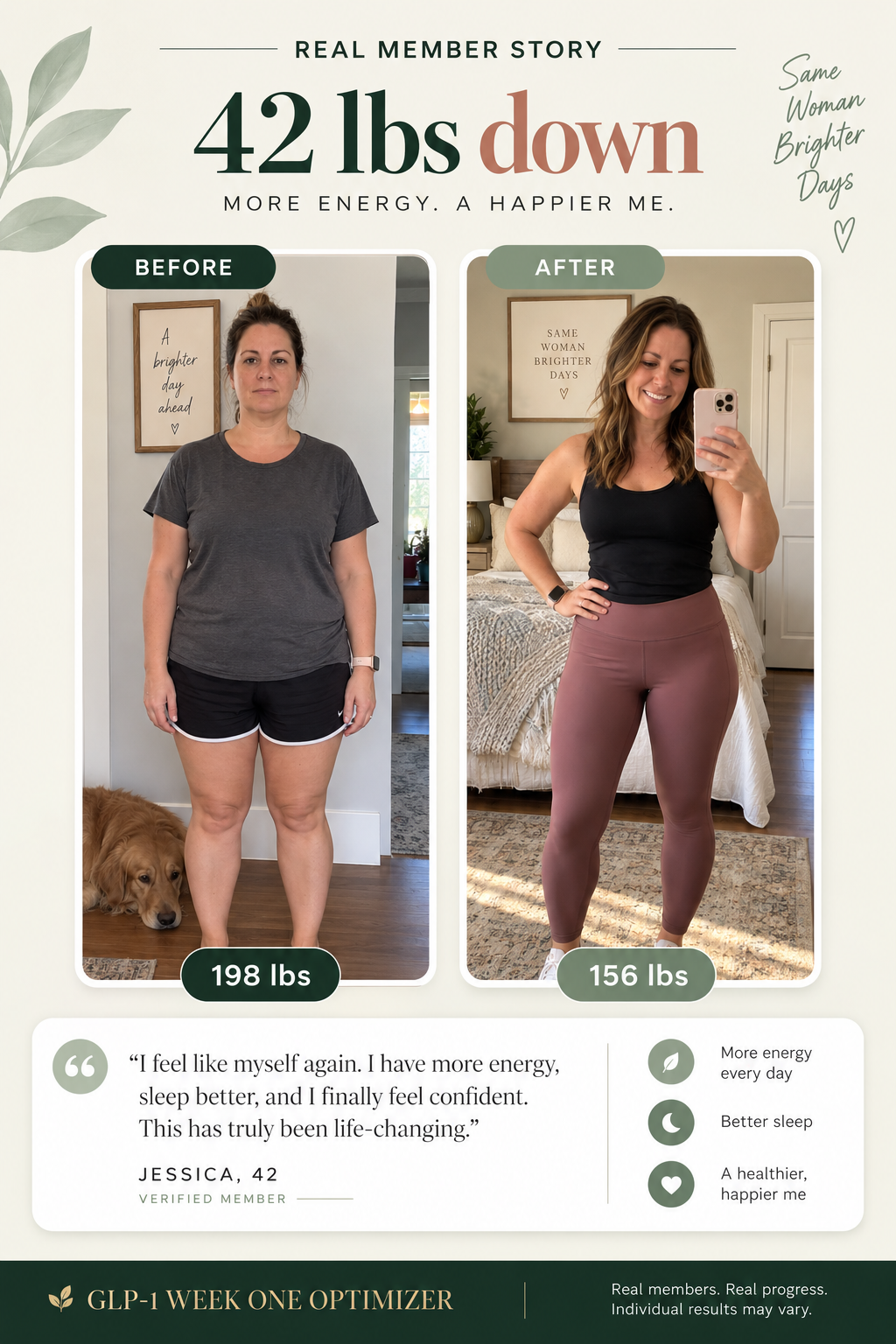
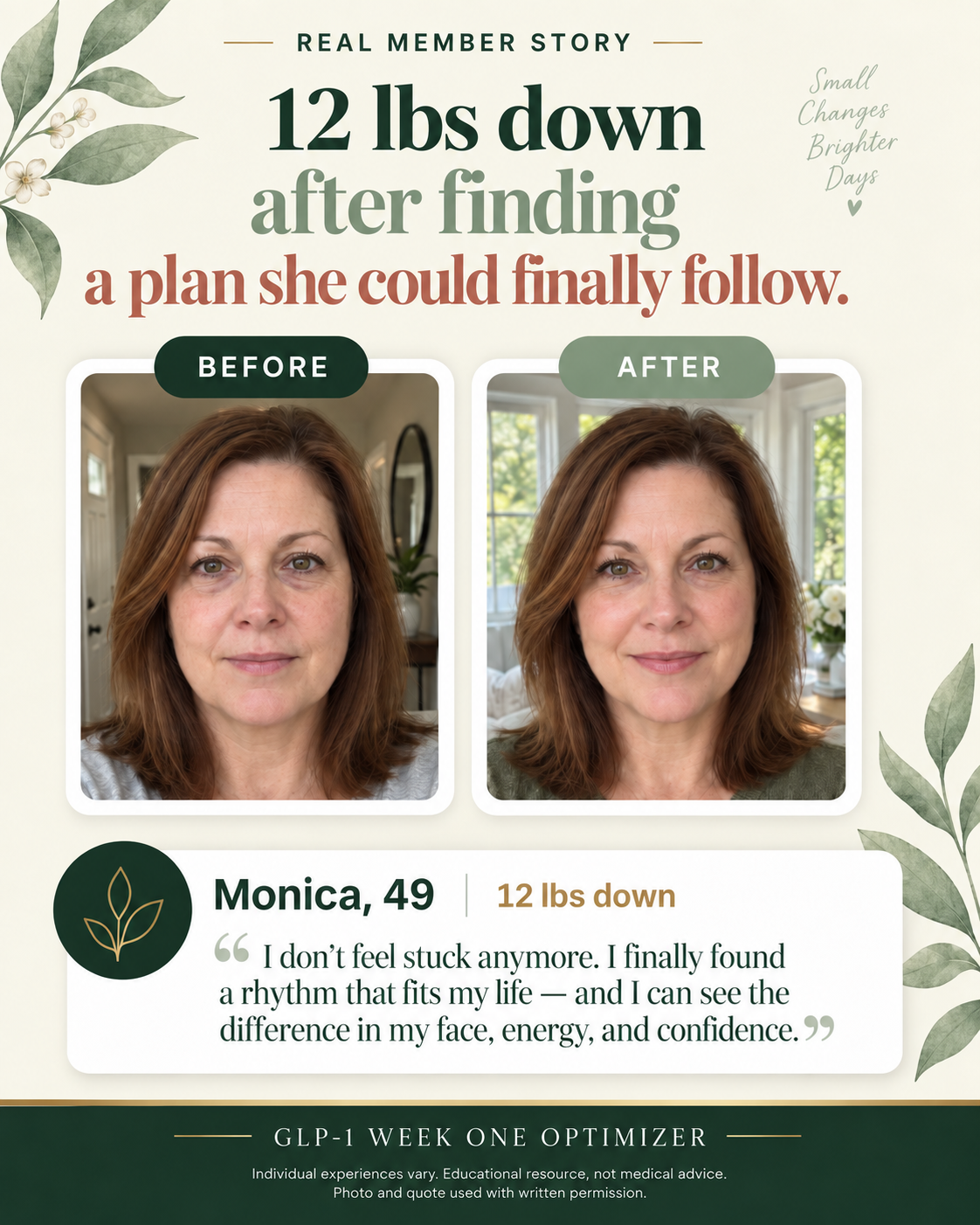
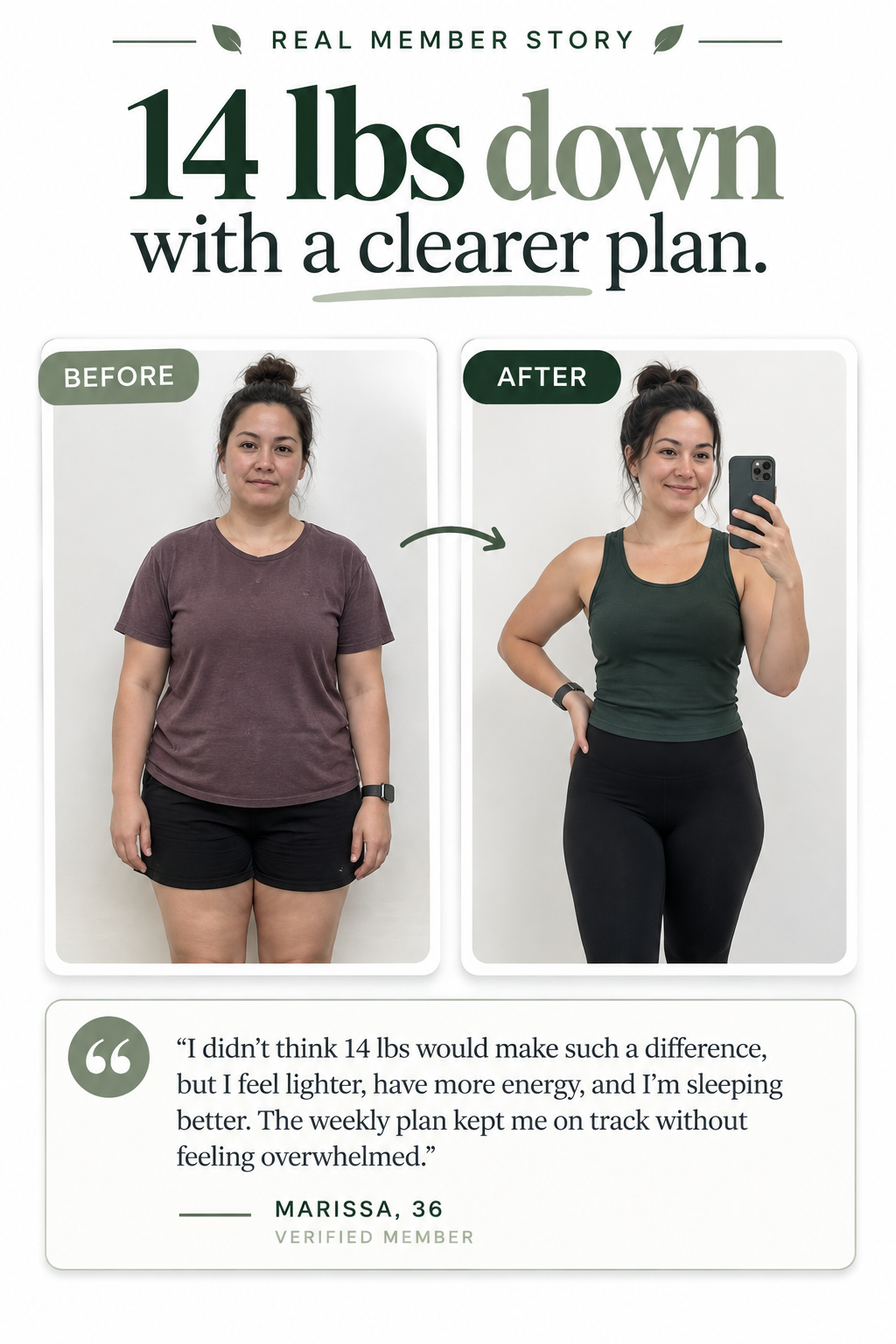

Individual experiences vary. These are personal experiences shared by readers of the guide, not medical outcomes, and not a promise of results. Photos and quotes used with written permission. This is an educational resource, not medical advice.
The price, because this part is almost silly
A single consult with a dietitian who actually understands GLP-1s runs $150 or more. One rough week of under-fueling and wondering whether you are doing this right costs you something too. It just does not show up on a receipt.
| The GLP-1 Week One Optimizer, 10 chapters, 61 pages | $47 |
| Bonus 1 · Mini-Meals For "Nothing Sounds Good" Days | $14 |
| Bonus 2 · The GLP-1 Meal Swap Grid | $12 |
| Bonus 3 · The Daily Tracker, printable | $9 |
| Bonus 4 · The Shot-Day Routine Card | $9 |
| Bonus 5 · The First-Week Grocery Template | $9 |
| Bonus 6 · Running The Guide On A Dose-Increase Week | $12 |
| Total value | $112 |
| Your price today | $19 |
You risk nothing.
Use it for 30 full days. Run the shot-day checklist. Follow the meal map. Track with the daily tracker. Keep it for your next dose increase. If at any point you feel it did not give you a clearer, calmer, more organized first week, email us and you get a full refund the same day. No questions, no process, no hard feelings. The only way to lose here is to keep guessing.
Questions worth answering
I am months in and my dose is about to go up. Is this still for me?
Yes, and this is exactly who Bonus 6 was written for. The first days after a dose increase tend to bring week one back: a quieter appetite, some queasiness, and the same "what do I eat now" question. You run the same map, the same shot-day card, and a fresh row in the tracker. The second time through, you already know your own pattern, which makes it faster.
I am already a few days in. Is it too late?
No. Start at the beginning anyway. Chapter 1 reframes the week in a way that makes everything after it land differently, and the meal map is built to be picked up on any day. Repeat a day you liked, skip ahead, or stay on an easy day longer.
Is this medical advice?
It is not, and it does not pretend to be. Nothing in here tells you to start, stop, or change your medication. Those decisions belong to you and your provider. What this handles is the practical side appointments rarely have time for, which is what to eat, when, and how to keep your week steady. Chapter 8 is even a list of questions to bring to your next visit.
Which medications does it work with?
Any GLP-1. It is built around what these medications do to appetite, fullness, and energy, which is common across the class, so it applies whether you are on a weekly or a daily version, at any dose.
Do I have to count calories or give up foods?
Neither. There is no calorie counting anywhere in it and no good foods and bad foods list. Three priorities carry the whole week: protein, hydration, and gentle consistency.
How fast can I use it?
Immediately. It is fully digital, so you get access the moment you order and you can be following it at your next meal. Print whatever you want to keep on the counter.
What if it is not for me?
Email us and we refund you the same day, for 30 days, no questions asked. You keep everything you downloaded.
Week one comes back. Be ready every time.
You can spend it improvising, living on crackers and coffee, hoping it works out. Or you can open something that was already thought through and just follow it. Then, when your dose goes up and that week comes around again, you open it again. The habits you set now become the autopilot you lean on at every step. Set them on purpose, once.
Get The Week One Optimizer For $19Instant access · 30-day money-back guaranteeP.S. If big meals feel hard right now, you are not broken and you are not alone. It is not that you are undisciplined. It is that the medication changed the rules of eating and nobody handed you the new ones. This is the new rulebook, for the price of a sandwich, with a 30-day guarantee that makes the decision for you. And unlike a sandwich, you will still be using it at your next dose increase. Grab it here →